Whitepaper

New biomarker advances cancer treatments

Drug Target Review Drug Target Review
27 Oct 2023 3 min read

Login or Register

After logging in, you can access the full content
Researchers have discovered ways to enhance NIR-PIT to ensure tumours are treated sufficiently and improve patient outcomes.

A biomarker based on microbubbles has been used to evaluate the success of near-infrared photoimmunotherapy (NIR-PIT) by scientists at Nagoya University in Japan and their collaborators. Tracking the microbubbles with ultrasound, the team identified areas where cancer therapy had not been fully applied. Their findings propose ways to improve NIR-PIT and make it a feasible alternative treatment for various types of cancer.         

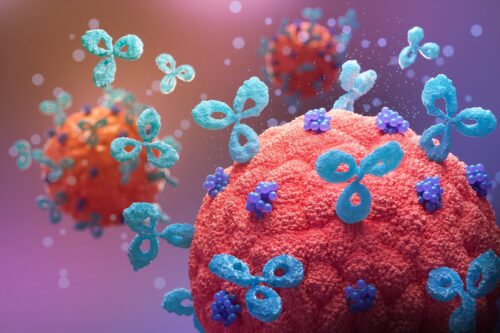
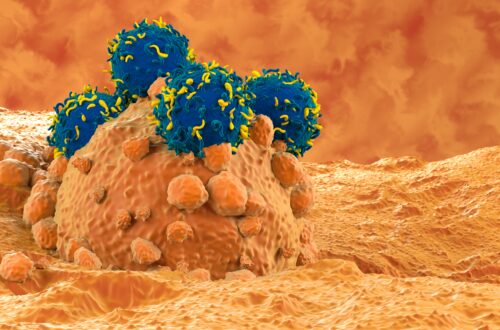
NIR-PIT combines the use of antibodies and near-infrared light to selectively destroy cancer cells while preserving healthy tissues. The antibody targets and binds to cancer cell proteins, creating a light-absorbing substance called IR700. IR700 activates and releases energy when it is exposed to near-infrared light, which destroys cancer cells. Along with surgery, radiation, chemotherapy and cancer immunotherapy, NIR-PIT is considered the fifth cancer treatment.

Physicians need to determine the optimum level of light intensity to destroy abnormal cell growth while also avoiding damage to healthy cells, to effectively treat a tumour.  However, it is challenging to ensure uniform irradiation of target cells during surgery because the host tissue reflects and scatters light. To prevent undertreating the whole tumour with insufficient light irradiation, physicians require an indicator to decide its effectiveness.   

Dr Kazuhide Sato of Nagoya University Graduate School of Medicine and his collaborators studied differences in tumour vessels compared to host cells. Previous studies have informed scientists that tumour vessels have irregular shapes, gaps between cells, and poor drainage. Poor drainage during NIR-PIT treatment helps therapeutic nanoparticles reside in the tumour and then enter cancerous tissue, resulting in a therapeutic effect known as the enhanced permeability and retention (EPR) effect.   

NIR-PIT treatment causes rapid tumour cell death which increases permeability in the tumour vessels and leads to a ‘super EPR effect’ (SUPR). The SUPR effect is 24-times higher than other therapies. It is likely that the treatment has been successful if the SUPR effect occurs all over the tumour. If it is isolated to particular regions, it is less likely that the treatment has been successful.   

To evaluate the success of the treatment, the team used the increased permeability to test whether larger fluorescent nanoparticles, like Sonazoid microbubbles, could be retained. Microbubbles provide an easy way to measure the SUPR effect as they can be clearly detected by reflecting harmonic signals off them.  

“We investigated with larger-sized fluorescent particles of two millimetre and five millimetre sizes”, said Dr Sato.  “We found that retention increased with both sizes.” The team used ultrasound imaging to track microbubbles, creating a new biomarker that measured the SUPR effect before and after treatment and evaluated the effectiveness of NIR-PIT. Dr Sato explained: “In short, the higher the retention, the higher the anti-tumour effect of NIR-PIT.”

Dr Sato hopes that this discovery will advance cancer patient treatment. “Using this new concept, we could confirm and predict the effects of the treatment after NIR light irradiation,” he stated. “This is especially important for patients who receive insufficient treatment. Additional irradiation could be performed flexibly. Since ultrasound imaging equipment has already been introduced in most hospitals and the microbubble contrast agent used in this study has already been approved, this technology is easy to translate to the clinic.”  

The study was published in eBioMedicine (The Lancet).

Related Whitepapers

Animal Models
Drug Development
Drug Discovery Processes
Immuno-oncology
Immunotherapy
Monoclonal Antibody
Oncology
Translational Science
+7
06 November 2025

Sugar-coated tumours: a new target for pancreatic cancer

Researchers have discovered that pancreatic tumours evade the immune system by disguising themselves with a sugar coating. To combat this, they have d...

Drug Target Review Drug Target Review
Nov 6, 2025 • 1 min read
Animal Models
Antibodies
Antibody Discovery
Cancer research
Drug Discovery
Drug Targets
Immunology
Immunotherapy
Translational Science
+8
06 October 2025

Blocking SLAMF6 enables T cells to kill leukaemia cells

Researchers have discovered a surface protein that helps acute myeloid leukaemia cells evade the immune system, offering potential insights to aid the...

Drug Target Review Drug Target Review
Oct 6, 2025 • 3 min read
Cancer research
Cell Therapy
Checkpoint receptors
Chimeric Antigen Receptors (CARs)
Clinical Trials
Cytokines
Immuno-oncology
Immunotherapy
Therapeutics
+8
02 October 2025

New CAR T therapy targets solid tumours safely and effectively

USC researchers have engineered CAR T cells to deliver a dual protein therapy that targets solid tumours – offering hope for cancers previously resist...

Drug Target Review Drug Target Review
Oct 2, 2025 • 3 min read
Animal Models
Cancer research
Clinical Trials
Drug Development
Drug Discovery
Immuno-oncology
Immunotherapy
Oncology
Precision Medicine
Therapeutics
+9
01 October 2025

Senolytic drug combo boosts cancer immunotherapy and reduces side effects

Researchers have discovered that targeting immune cell ageing can overcome resistance to head and neck cancer treatment....

Drug Target Review Drug Target Review
Oct 1, 2025 • 2 min read
Cancer research
Drug Discovery
Drug Discovery Processes
Immuno-oncology
Immunotherapy
Next-Generation Sequencing (NGS)
Oncology
Organoids
Precision Medicine
Sequencing
Translational Science
Vaccine development
+11
30 September 2025

Tiny models, powerful insights: how organoids are driving precision oncology

A new review has highlighted how three-dimensional organoid models are transforming cancer research by replicating the complexity of human tumours – b...

Drug Target Review Drug Target Review
Sep 30, 2025 • 4 min read
Analysis
Antibodies
Assays
Autoimmune disease
Cancer research
Cell Therapy
Chimeric Antigen Receptors (CARs)
Drug Discovery
Drug Discovery Processes
Immunology
Immunotherapy
Monoclonal Antibody
Oncology
T cells
+13
19 September 2025

Anti-linker antibodies: a universal key for CAR-T detection

Every new CAR-T needs a new detection tool – until now. Anti-linker antibodies could change how researchers develop and track these therapies....

Drug Target Review Drug Target Review
Sep 19, 2025 • 4 min read
Cancer research
Drug Discovery
Drug Discovery Processes
Immunotherapy
Oncology
Translational Science
+5
18 September 2025

Melanoma research: targeted drug duo reactivates immune response

Researchers at Sutter’s California Pacific Medical Center have discovered a potential new treatment strategy for melanoma patients who stop responding...

Drug Target Review Drug Target Review
Sep 18, 2025 • 2 min read
Cancer research
Drug Discovery Processes
Immunology
Immunotherapy
Mitochondria
Oncology
T cells
Translational Science
+7
12 September 2025

Tumour stress drives T cell exhaustion – antioxidants may reverse it

A new research study has discovered that targeted antioxidants could restore T cell function – offering a potential boost for cancer immunotherapies l...

Drug Target Review Drug Target Review
Sep 12, 2025 • 3 min read